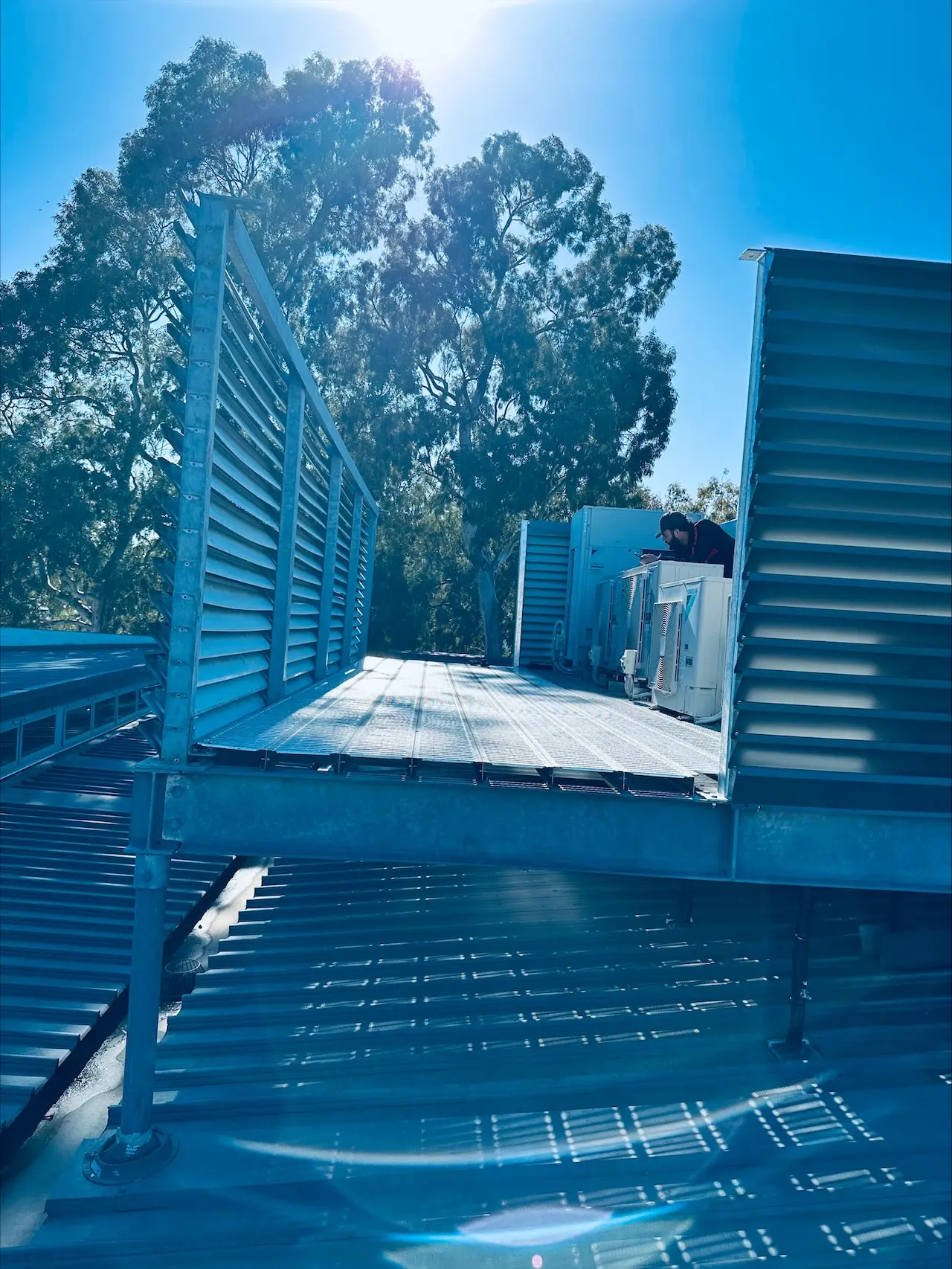
Whether it’s fixing a pesky leak, servicing a solar panel, or replacing an HVAC system, accessing the roof means working at height and managing a high-risk area.
For building owners and facility managers, how workers access the roof – and what’s in place to keep them safe while they’re up there – isn’t something to overlook.
Not only is roof access about practicalities and keeping people safe, but it also comes down to compliance. Get it wrong and you’re not just dealing with a safety risk – you’re exposed to serious legal liability.
With that in mind, here’s everything you need to know to keep everyone (including yourself) covered.
What are roof access systems?
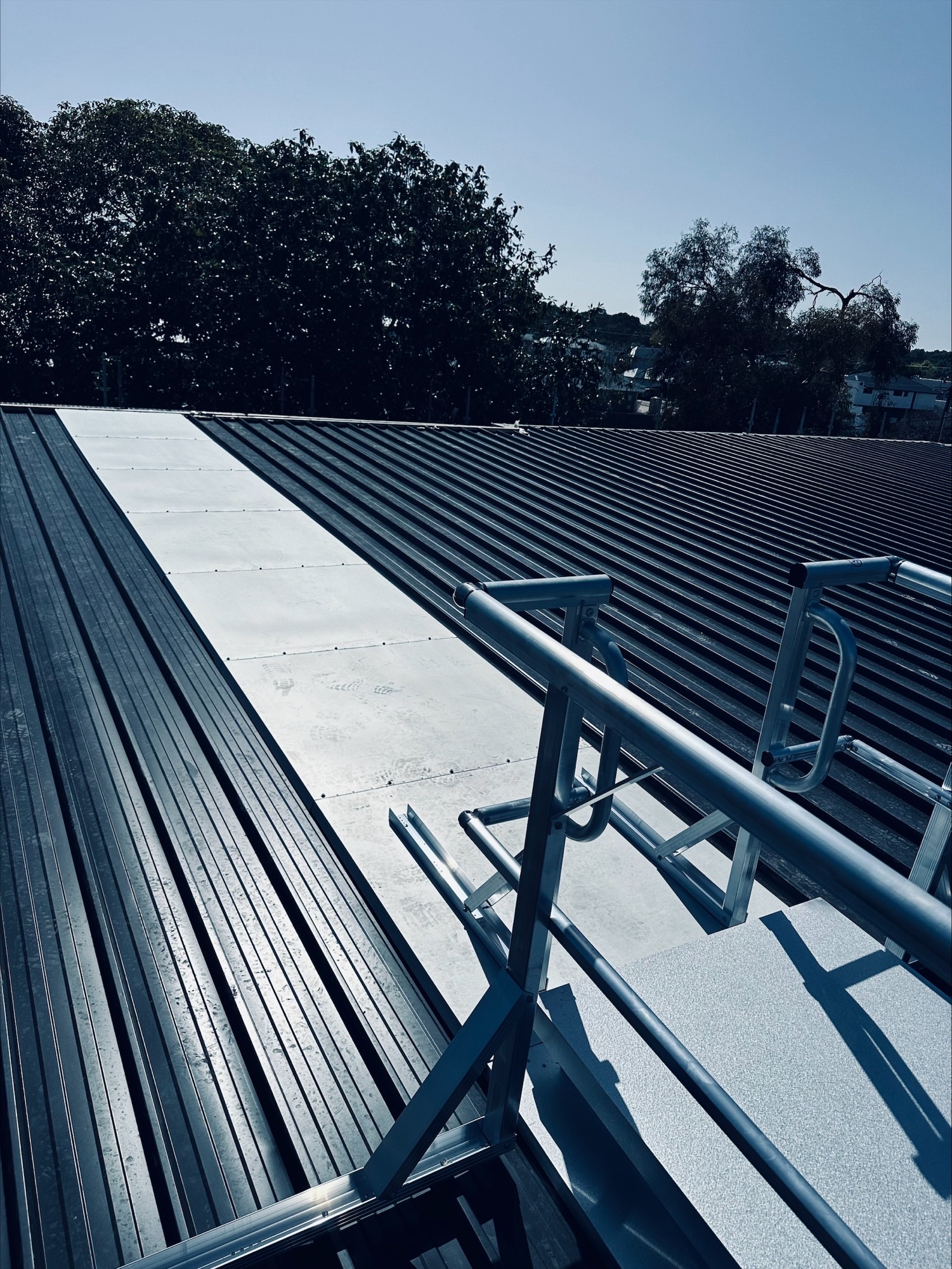
In layman’s terms, a roof access system is everything that gets someone onto a rooftop safely and lets them move around freely once they’re up there. It can include anything from entry points like stair access, ladders and hatches, to sturdy walkways, handrails and anchor points; a tailor-made system designed for the job at hand.
It’s worth noting that in a commercial or industrial context, these systems need to meet specific Australian Standards. Unfortunately, it’s not a matter of using whatever’s already on the building and hoping for the best.
Different types of roof access and fall protection systems
The right setup really depends on your building, your roof, how often people need to be up there, and what fall protection risk management need to be considered.
Fixed roof ladders
The most common way onto a roof is a simply via a ladder. To comply with AS 1657 in South Australia, fixed ladders need non-slip rungs, appropriate spacing and fall protection. This can include a cage or a fall restraint system once you get above a certain height.
Note: Many older ladder models don’t meet current requirements, so ensure you double-check their specs.
Roof walkways
Once someone is on the roof, they need a safe path to get to their destination, especially on fragile or pitched surfaces. Walkways define that path and keep people away from areas that can’t support their weight.
Platform and stair access
For rooftops with regular foot traffic or where people need to carry equipment up, a proper stair-and-platform setup is far more practical (and safer) system than a vertical ladder.
Anchor points and horizontal lifelines
These allow workers to stay connected to the building while moving across the roof. They work best when they’re designed into the access system from the start – not bolted on as an afterthought.
Roof hatches
The point where someone transitions from inside the building to the rooftop is a risk point in itself. A compliant hatch must be sized correctly, structurally sound, and designed to work with whatever access system sits below it.
Compliance requirements in Australia for roof safety
We know compliance requirements can feel like a bit of a minefield. So, simply put, the key standards governing roof access and height safety in Australia are:
- AS/NZS 1657 (fixed platforms, walkways, stairways and ladders),
- AS/NZS 1891 (industrial fall-arrest systems), and
- The Work Health and Safety Act 2011, which sets out the duty of care obligations for anyone running a business or managing a site.
In South Australia, SafeWork SA handles compliance and enforcement across the state, from the Adelaide CBD to regional South Australia. If something goes wrong on a rooftop, and your access system isn’t up to scratch, the consequences for building owners and facility managers can be significant.
Looking for AS 1657 compliant roof access systems in Adelaide and wider South Australia? Hallweld Safety provides height safety and fall protection solutions that comply with Australian Standards and relevant Work Health and Safety legislation and regulations.
Common mistakes we see
More often than not, rooftop safety issues aren’t the result of people cutting corners deliberately; they’re the result of systems that were put in place years ago and never reviewed, or quick fixes that didn’t take the bigger picture into account.
The most common problems we see are:
- No defined walkway on a fragile roof surface
- Ladders that don’t meet current height or configuration requirements
- Anchor points that were never load-tested or engineer-certified
- Systems that were added over time without any thought to how they work together.
While none of these issues are particularly unusual, all of them are fixable to ensure proper fall protection measures are in place.
How often should workplace height safety systems be inspected?
There’s no single answer that applies to every building, but as a general rule, height safety systems should be inspected at least once a year by a qualified inspector. More frequent checks should be organised if the system receives heavy use, operates in a harsh environment, or has been reported to have issues. Some systems, like fall-arrest equipment, often need more regular inspection under the relevant Australian Standard.
If you’re not sure what your specific setup requires, that’s a conversation worth having with a height safety specialist rather than second-guessing.
How to choose the right system
Start with a proper rooftop assessment. Then, you’ll understand who needs access, how often, what they’ll be doing up there, what your roof can structurally handle, and what compliance requirements apply to your building type and industry.
From there, a height safety specialist will put together a system that fits your building and needs, rather than a generic solution that looks good on paper.
How we can help
Hallweld Safety is an Adelaide-based team of height safety specialists who love what they do. The team works across commercial, industrial and infrastructure projects across SA, handling everything from the initial rooftop assessment through to design, installation, and certification.
All access and safety systems are expertly engineered to meet current Australian Standards, and full documentation is provided for your compliance records. Thinking of upgrading an existing setup, preparing for an audit, or starting fresh on a new build? It’s worth having a conversation before anything gets specified or installed.
Chat to the Hallweld team to book your rooftop assessment.